
Olden Era seems to be the Heroes of Might and Magic game that hardcore fans of the franchise were waiting for.
I, personally, love playing the game – and this comes from someone who has amassed thousands of hours of play time in HoMM 3 (and considers it the best game ever made).
Even though being a veteran Heroes of Might and Magic player gives you a massive advantage, there are still plenty of new things: mechanics, spells, units, heroes, and more.
So, no matter what your level of experience with the franchise is, knowing these important Olden Era tips and tricks that I’m sharing below is a must, as these can be considered the basics, before jumping into more advanced strategies. Let’s check them out now!
NOTE: Because Olden Era is currently in Early Access, the meta is most likely going to change. But even so, the core loop will remain the same and most of the advice below will always be useful. Still, I will update this article as soon as new major updates are released by the game’s developer, Unfrozen.
1. Your first in-game week, makes it or breaks it
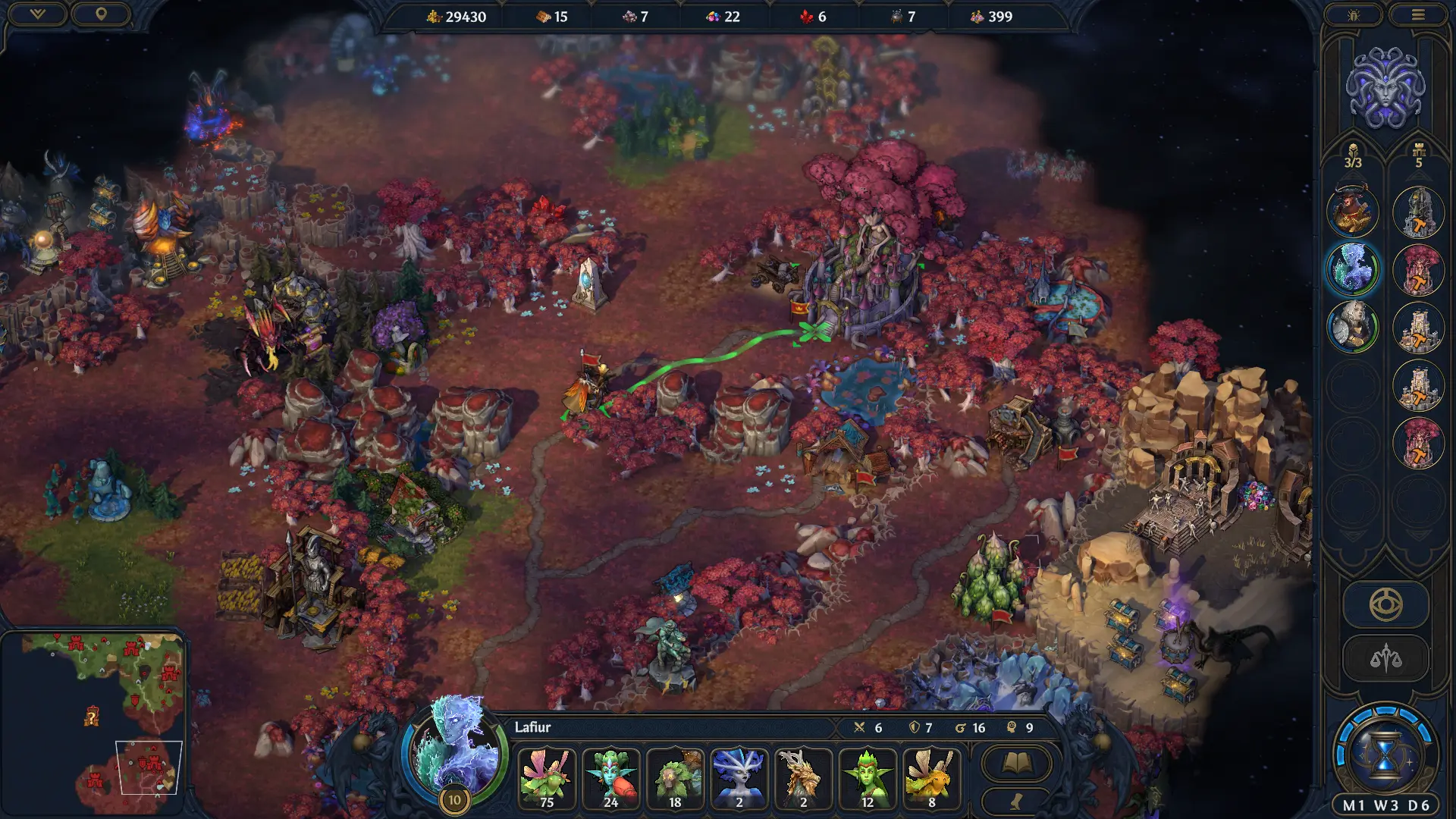
A new week means a new beginning in Heroes of Might and Magic games, Olden Era included. This means that you get a fresh influx of units in your castle and various structures on the world map get refreshed.
In most cases, playing the first game week right, gives you massive advantages – and failing to achieve some key objectives will, at the very least, make the challenge ahead a lot tougher.
Generally speaking, in a regular Olden Era game, you want to end day 7 like this:
- a minimum of two heroes
- as much of the map explored as possible
- spare resources (ideally, at least a wood and ore mine captured)
- town built the right way (see tip #2 below)
- enough gold to buy most of the new troops
- main hero ready to be reinforced
By the end of the first week, you should have a clear plan and a path to follow (conquer a nearby castle, or know where to go) and focus on achieving that by week two. Be aggressive, have a plan and make it happen!
2. The right way to build your town
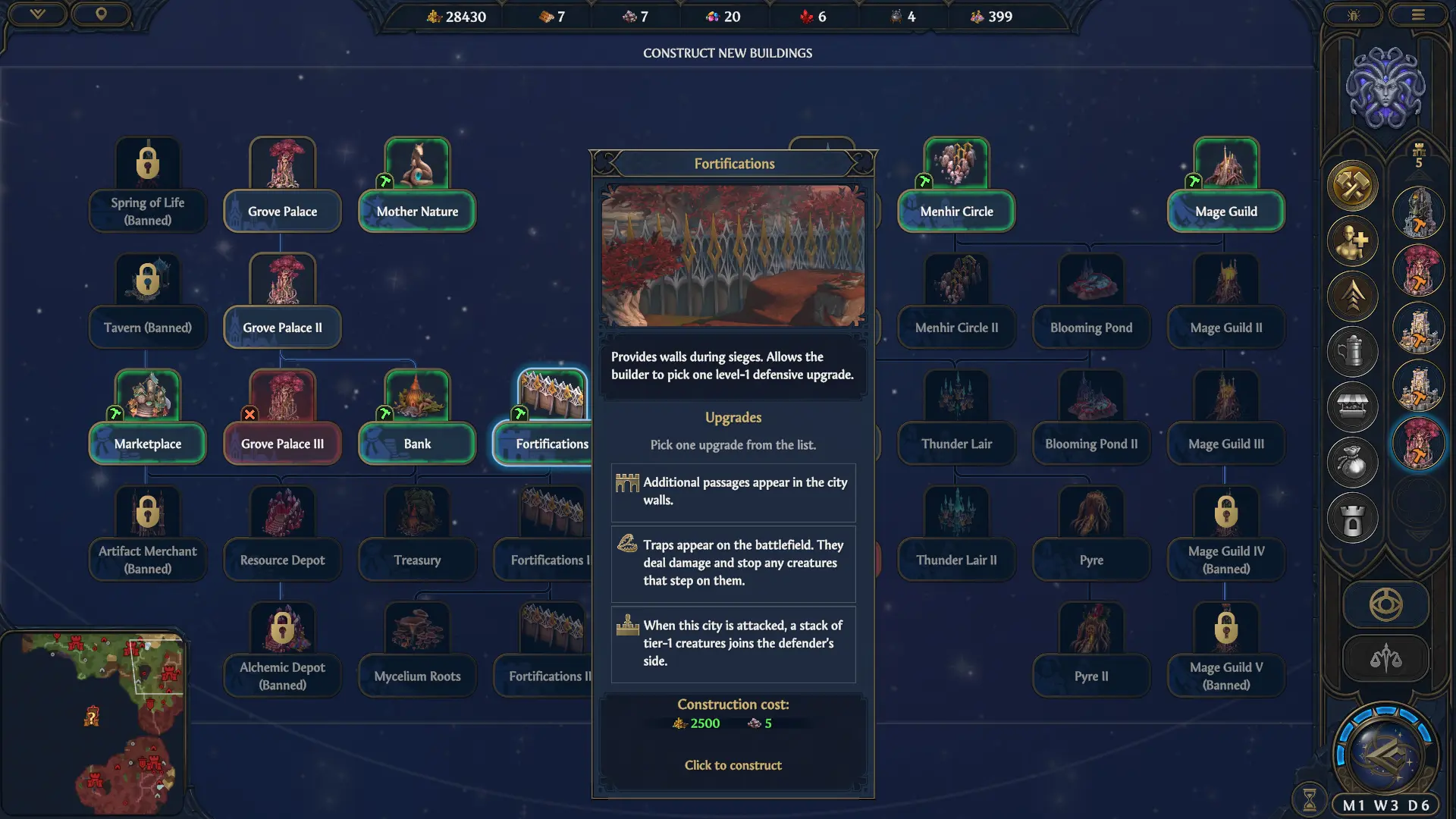
While your goal is to build all structures in each city you have, the order in which you build them – especially by the end of the first week – is extremely important.
Early in the week, you should focus on the structures that give you more gold and have at least the bank built.
In the following days, build your unit-producing buildings, aiming to end the week with at least the first three tier units unlocked and ideally the first level of the Magic Guild also built.
Finally, by the end of the first week, you should have at least Fortifications II built to get a boost of troops. By the way, you can read my guide to building Fortifications the right way here.
The second week follows in a similar fashion: make sure you complete the money-producing buildings, and the final level of the Fortifications. Also, build as many of the troop-generating structures as possible.
While upgrading one of them will probably give you the boost you need (usually – ranged units), your main focus should still be unlocking as many unit types as possible early one, so they can pile up in the recruitment tab, even if you don’t have the money to recruit them all yet.
NOTE: If you start the game with two cities or more, focus on maxing one out first, as it will be nearly impossible to properly build up more than one early on. Ideally, have a main town and one that focuses on producing more gold or resources (including Law Points).
3. Have more than one Hero
Unless you specifically choose the game mode that only lets you play with one hero, having more is essential.
You still need to have a main Hero (the one that does the main fighting, has the best skills and artifacts), but secondary ones are important for:
- exploring the map
- acting as troop carriers for the main hero
- collecting weekly resources and troops from the buildings on the map
- collecting resources cleared by the main hero
Basically, your secondary heroes do all the tasks that would waste precious movement points from your main one.
For example, you usually have monsters guarding stacks of resources on the game map. Use the main hero to eliminate them, but don’t collect the resources with them. Instead, do it with the secondary hero.
There is also a more advanced strategy you can consider, called “hero chaining.” This means that you have secondary heroes spread over the map in such a fashion that one recruits troops from your town, then has enough movement points to reach a second hero and pass those troops.
The second hero has enough movement points to reach a third hero and transfer the troops, and so on until you reach your main hero, replenishing troops in a single day.
This is more advanced and requires more planning, so if you’re just starting, having secondary heroes for the gathering is solid enough.
4. Focus on money (and resources, if possible)
Early on, regular gold is the most important resource in the game, closely followed by the basic resources (wood and stone) and the “advanced ones” (gems, crystals, and mercury – no sulfur, like in the other HoMM games).
While you do need the other types of resources to build new structures in your town, gold is required to get more troops early on – and those are essential for getting more resources to quickly develop your town.
This is why you build the money-generating structures in your city in the first days of the week.
Also, when on the main game map, choose money as a reward from chests (instead of bonus XP), and prioritize getting gold, resources and exploring items that give you these with minimal troop losses. Speaking of which…
5. Don’t lose troops!
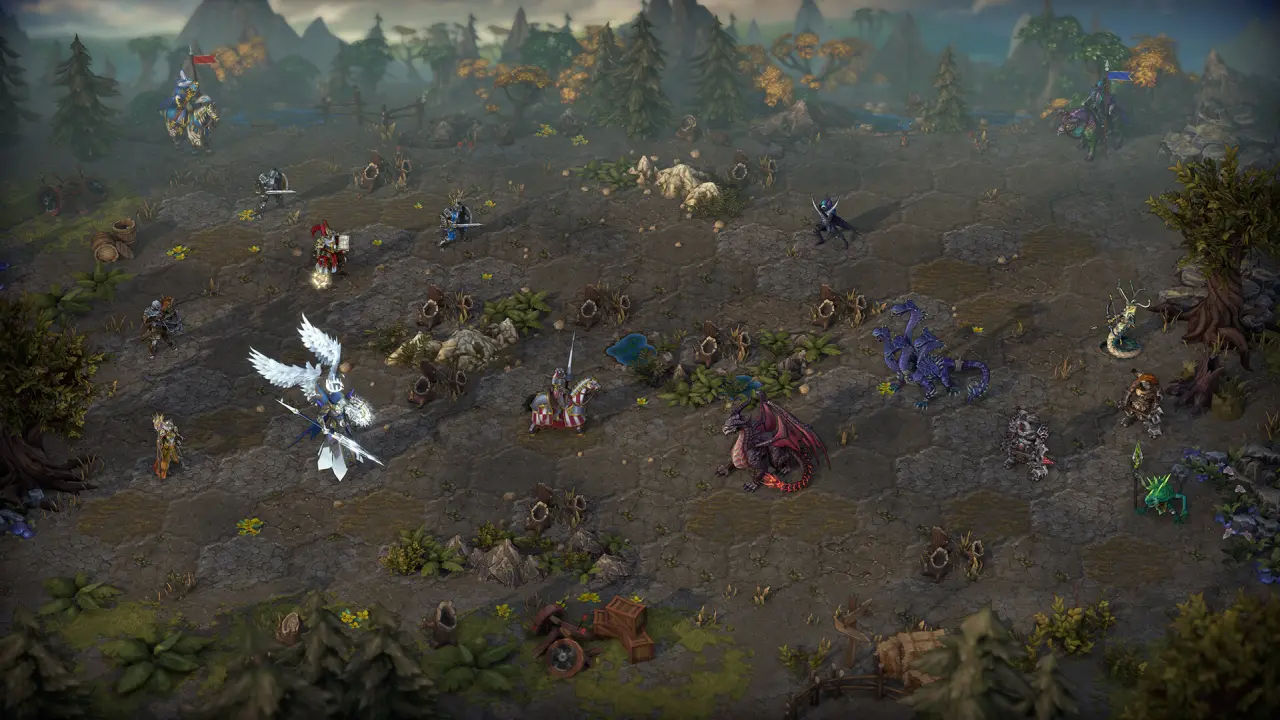
Winning a battle in Heroes of Might and Magic: Olden Era doesn’t mean anything if your army is destroyed afterwards. The main goal with every fight is to lose as few troops as possible (ideally – none).
This means mastering the battlefield – which is a thing that will take a LOT of time, but you’ll get the edge if you keep the following in mind:
- use the “wait” and even “skip turn/defend” buttons to let the opponent move first, get within striking distance and gain an advantage.
- unless you are sure you won’t lose troops, don’t rush your melee units into battle
- target the ranged units first – both with your own ranged ones, focus point abilities and spells (spells like Twilight that block units from using ranged attacks are amazing)
- know what enemies counter (some even strike before you hit them), so plan your attacks accordingly, hitting with your lowest-tier troops first so they consume their counter
- use magic not just to deal direct damage – spells that increase your initiative, prevent you from taking damage from the first attack and other passive ones might be better than pure damage-dealing ones.
Eventually, as you play, you will know what each unit on the battlefield does, what their weaknesses and strengths are, and what to target first.
PRO trick: When you fight and don’t have all your unit slots filled, you should exploit the game’s mechanics by creating one-stack cannon fodder troops from your lowest tier units.
In battle, attack with these 1-unit stacks first to trigger the counter from the troop you’re attacking, use them as “shields” for your ranged units, while they might also be targeted by your opponent’s ranged units, virtually wasting one of their turns.
6. How to Properly Use Magic
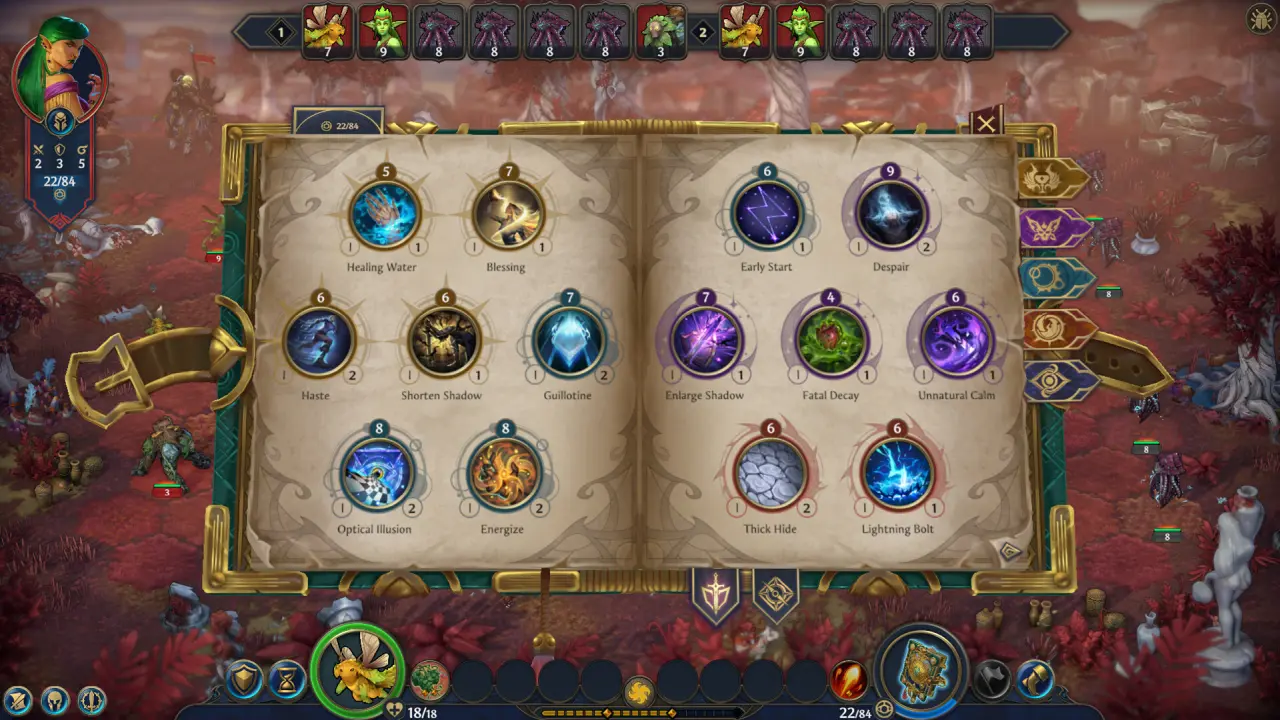
I mentioned magic earlier, and it’s an important one. The Magic system in Olden Era has changed completely compared to Heroes of Might and Magic 3 (and other HoMM games), with new spells, modified spells and different mechanics.
Spells are divided into tiers and categories, with all spells being able to level up (if you have more cities and build Mage Guild levels that give you overlapping spells, that spell’s level increases).
Now, there are plenty of strategies when it comes to using spells, and you have to be able to adapt depending on the enemy you are facing.
The most important part is learning which are the best spells to use, generally – and if you have them.
Some of my favorites (although still highly situational) are, in random order: Ice Bolt, Carapace, Twilight, Energize or Cave in.
Generally, the higher-tier spells are better, but you have to keep trying various strategies and see what works best. In some cases, using spells with debuffs (or buffs) will have better results than direct-damage ones, as I already mentioned above.
For example, having a stack of ranged units lose their ability to shoot, blocking a tough stack with a cave in, or making a Griffin lose their counterattacks might be extremely helpful in difficult battles.
Finally, you need mana to cast spells. This regenerates slowly on its own, but you can instantly refill your mana at a magic Well on the map or by sleeping (ending your turn) while in a town.
7. Laws And Astrology
Beyond magic, you need to track Law Points and Astrology Points – both new additions, both easy to ignore (or forget about) no matter your experience level.
Law Points are generated mainly in your town and through fighting, and you can use them for unlocking Faction Seals.
These are faction-specific and game-wise upgrades that help your progress tremendously. They range from resource or gameplay related boosts (they differ from faction to faction) to boosts received by your units.
I recommend finding a balance here, but know that for the mid and end game stages, the unit Faction Seals are very powerful and basically mandatory.
Astrology Points tie directly into your spell constellations and map spell progression, helping you unlock neutral spells (but extremely useful ones, like Town Portal).
8. Learn about the subclass mechanic
Another interesting addition to Olden Era is the hero subclass mechanic. Each hero in the game can unlock one of two possible subclasses by learning five skills required by the desired subclass and leveling them all up to level 3 (expert).
You should plan for your hero’s subclass early on and try to get your skills based on that.
To make things easier, you can hover over your hero’s profile and look at the icons next to each subclass. Then, when gives the choice of selecting a skill, look for the same icon next to the skill – if it is there, it’s a required skill for unlocking the subclass.
9. Choose the right faction
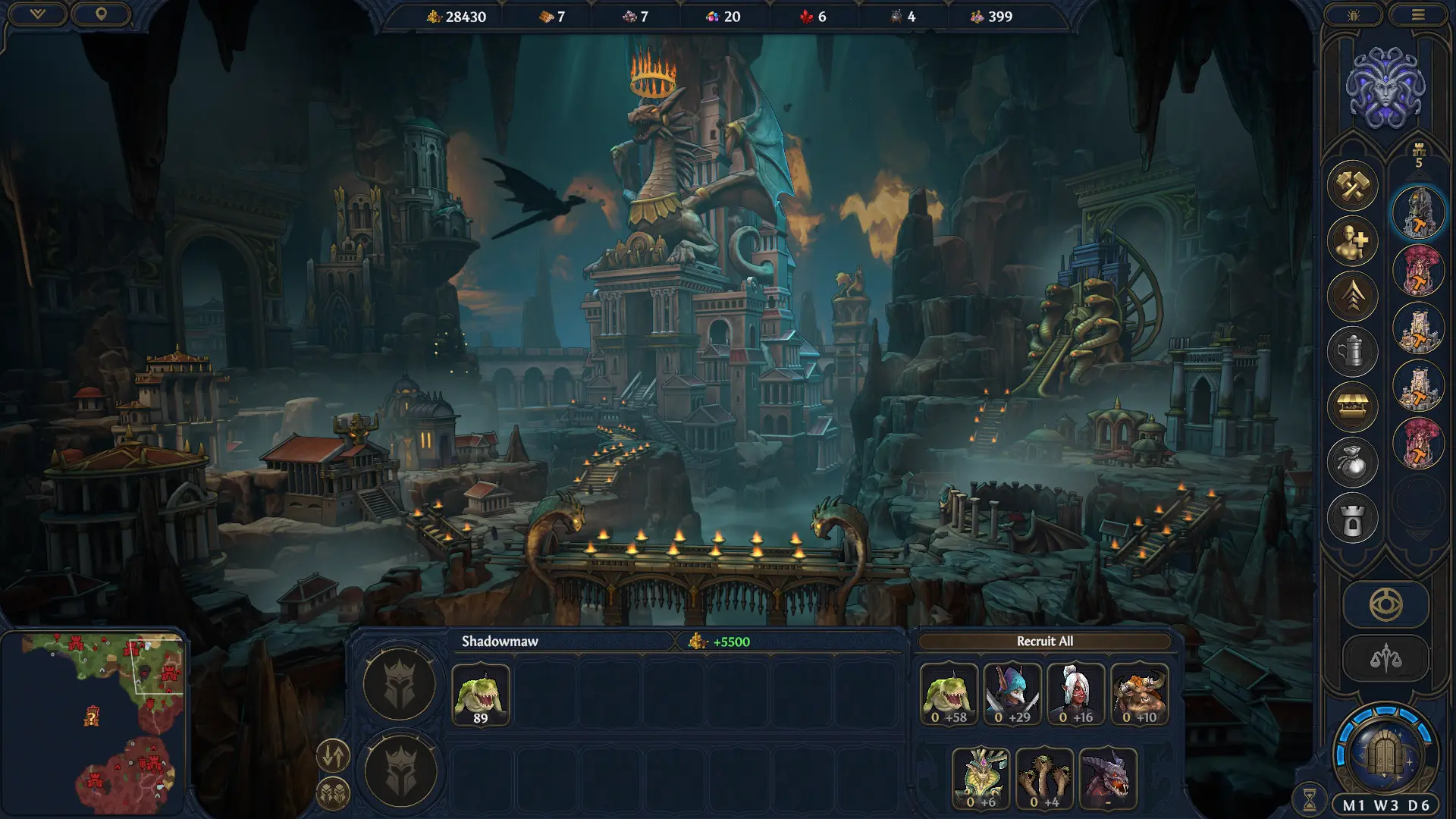
There are currently six factions you can choose from in Olden Era, and you have to find your favorite to master.
Right now, my favorite faction is Dungeon (the main problem being that their first ranged unit is at tier-3), closely followed by Schism. I will update this as I get more play time with each faction and potentially change my opinion.
If you’re just starting, you might want to choose Temple instead – it’s an easy-to-play, straightforward faction with two solid ranged attackers early on.
Also, it’s worth knowing that Necromancers are very popular among players right now, although I don’t find them as good as they were in HoMM3, for example.
10. Build up your main hero the right way
You MUST have a plan when it comes to how you build your main hero. That will be the force you send into battle, taking out enemies and enemy towns. This means that they need the best troops you have at your disposal, but also the best possible set of skills.
In my opinion, unlocking a subclass is mandatory for your main hero, as these give you potentially game-changing boosts (like the Unbound subclass of the Schism faction which makes all your spells be at max level, or the Temple’s Paragon subclass, which has your troops deal maximum damage always and get minimum damage at all times).
Apart from subclass unlocks, which come later in the game, you should build a hero that has skills that help in battle, but which also fit your play style.
Usually, Might heroes should focus on skills that complement brute force, while Magic-focused ones should focus on boosting their magic skills.
No matter what type of Hero you have, skills like Logistics, Leaderhip, Offence and Defense usually come in handy.
There are 23 secondary skills in the game, out of which your Hero can only learn 8, so there’s a lot of exploring to do on your side.
11. Know the map you’re playing
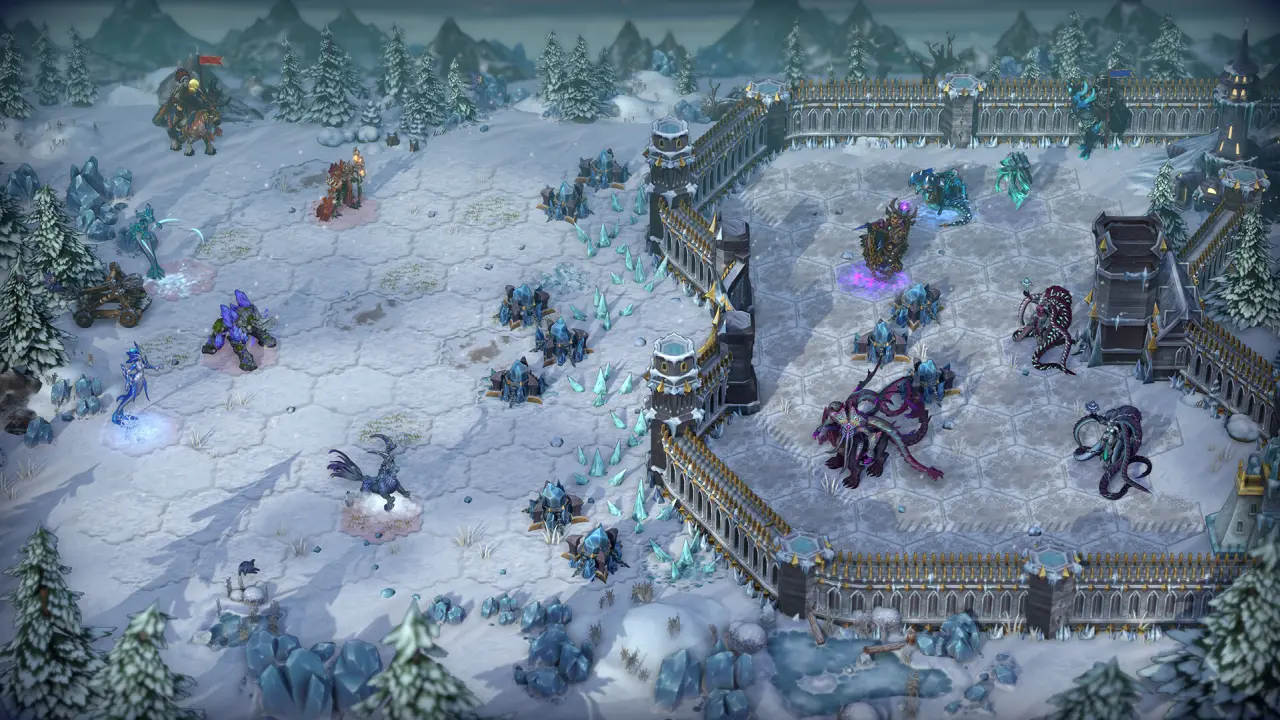
Even though maps can get pretty confusing, especially the larger ones and later on in the game, you must know where everything is.
Seeing a hero move on the map and not knowing where they are (and, most importantly, how much of a threat they are to one of your cities or heroes) is a big mistake – and one you should never make.
The same goes for more annoying tasks – like collecting resources or troops from various dwellings. While the resources themselves might become less useful later on, early in the game, constantly collecting from the buildings scattered on the map is essential.
Use the danger zone feature (the map icon in the top left) to create a red aggro ring around enemies so you know exactly how close you can get before a fight triggers.
12. Easy to learn, difficult to master
Just like all the other games in the series, Heroes of Might and Magic: Older Era is complex and extremely challenging, even though the basics are relatively easy to learn.
This is the magic of the game, the thing that makes it so amazing. Mastering it requires time, plenty of practice, missions lost, and reading plenty of articles online (here on Common Sense Gamer mainly, I hope) but it is totally worth it.
It’s been decades since we received a truly amazing HoMM game, and we finally have it!
And if you have additional tips and tricks to help fellow players starting out, let us all know in the comments down below. Also, if you have any questions, shoot them down below and I will gladly answer

- Rooms & Exits Kitchen Walkthrough (Level 11, Chapter 3 – Murder Dressed in White) - October 15, 2026
- Rooms & Exits Garden Walkthrough (Level 10, Chapter 3 – Murder Dressed in White) - October 15, 2026
- Rooms & Exits Complete Walkthrough Index by Chapter and Level - October 12, 2026