

Ranked in Marvel Rivals looks simple on the menu screen: climb from Bronze to One Above All, grab a costume, enjoy feeling superior. But we all know that the reality is a lot more difficult.
I am here to help you, though, with a mega guide (updated, too) to the Marvel Rivals Ranks right now.
Everything below is current as of Season 10.5. NetEase adjusts ranked between seasons, so when a new one starts, some of the things you read below might be changed a bit (or more).
The Nine Ranks in Marvel Rivals
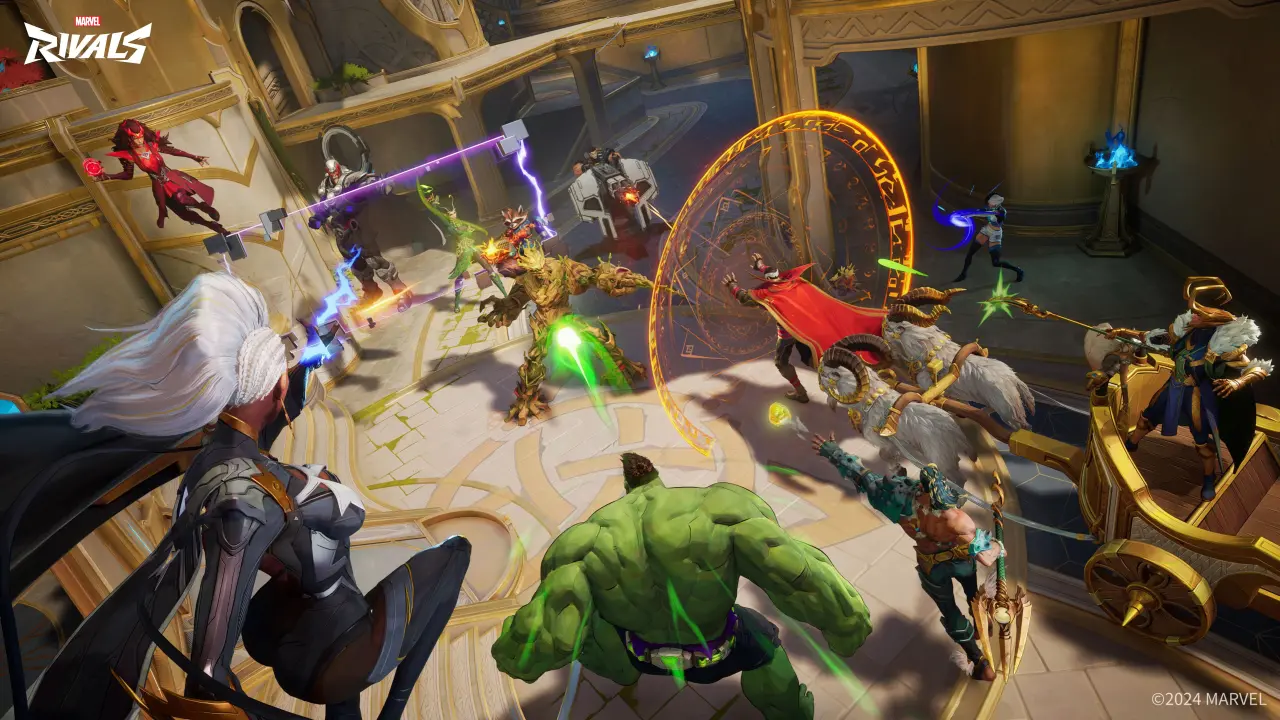
Bronze through Celestial each split into three divisions (III, II, I), which gives you 21 divisions.
Eternity and One Above All sit on top with no divisions at all, and that makes 23 individual ranks. Every division costs 100 rank points, so a full tiered rank is a 300-point climb.
| Rank | Divisions | Points to clear |
|---|---|---|
| Bronze | III, II, I | 300 |
| Silver | III, II, I | 300 |
| Gold | III, II, I | 300 |
| Platinum | III, II, I | 300 |
| Diamond | III, II, I | 300 |
| Grandmaster | III, II, I | 300 |
| Celestial | III, II, I | 300 |
| Eternity | None | Points only |
| One Above All | None | Top 500 only |
Bronze is where every account starts, at Bronze III. You learn hero mechanics, map awareness, and what the objective is.
Progress here comes from fundamentals: understanding your role on the team and managing the flow of a fight instead of sprinting at the nearest enemy.
Silver shifts the focus to consistency and coordination. Players polish their strategies and attempt more team-based maneuvers, and the climb now depends on communication and adapting in the middle of a match.
Gold is the first real milestone. Players show a stronger grasp of advanced tactics, timing, and positioning, plus a better idea of how to work with teammates.
It is also where the first-ranked reward lives and where the ban phase begins, so the jump from Silver is bigger than the badge suggests.
Platinum brings a dramatic jump in competition. Players are more disciplined, their decision-making is sharper, and small mistakes now cost you fights.
You have to coordinate with your team and anticipate what the enemy is about to do.
Diamond is where the margin for error shrinks. You are expected to bring great mechanics, excellent reaction times, and a working grasp of tactics.
Grandmaster (III, II, I) is the elite tier. Mechanical skill is the entry fee, and strategic insight plus team leadership decide who stays. Grandmaster players make decisive calls, turn losing fights around, and stay consistent under pressure.
Celestial (III, II, I) is the last rank that still has divisions. Individual skill matters a lot, but you are also expected to contribute to coordinated team play, and games get serious, especially against players in adjacent ranks.
Eternity is the second-highest rank and has no divisions. You are now competing with some of the best players in the game, so teamwork and mechanical skill matter, plus a little luck.
Stop playing for a while, and you start losing rank points, which results in a demotion. The inactivity window is 7 days.
One Above All also has no divisions and is reserved for the top 500 players, meaning the players holding the highest rank points.
They can keep gaining points indefinitely, and the top 500 keep their rank. Skip playing and your points drop fast, with rank decay on top, so demotion arrives quickly.
Also read: Marvel Tokon Moves & Combos for Black Panther, Blade and Captain America
Top 500 and One Above All Are Not the Same Thing
The Top 500 list and the One Above All rank sound like twins, and they are not.
One Above All sits above Eternity, so a strong Celestial II player can appear on the Top 500 list without owning the rank, while an Eternity player who breaks into the top 500 gets promoted automatically.
Divisions Explained
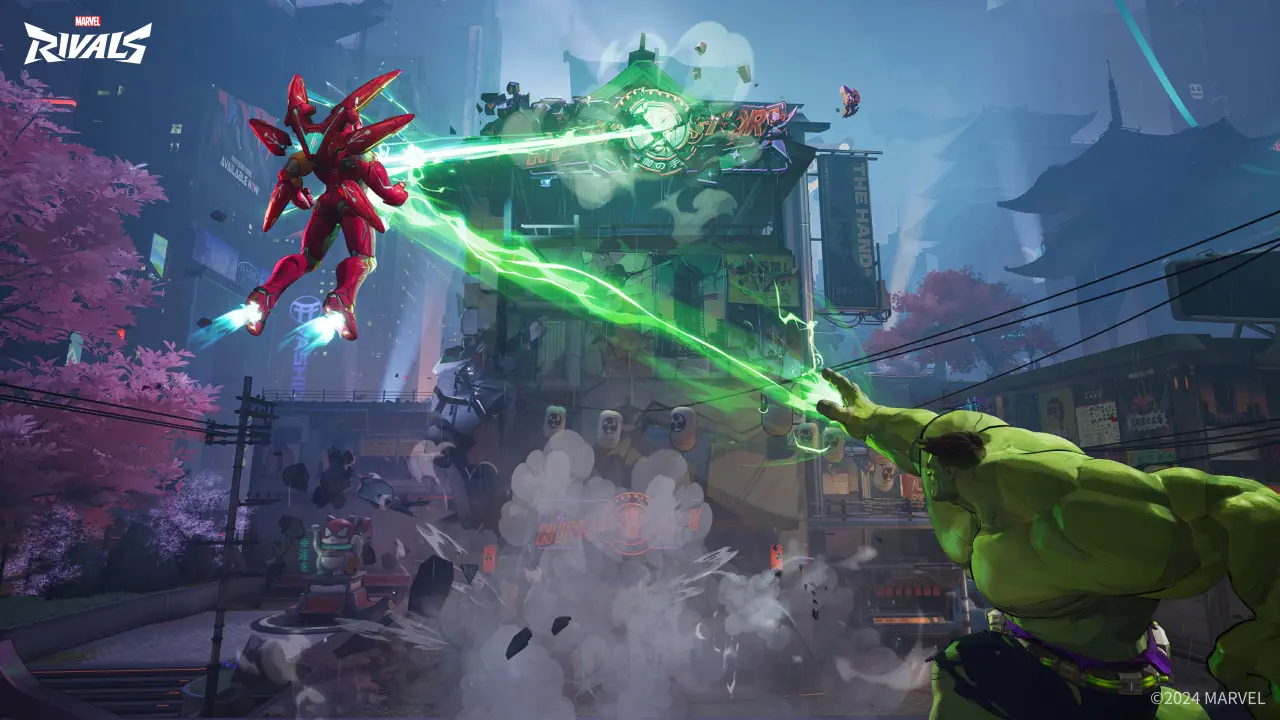
Each rank splits into Division 3, Division 2, and Division 1, and they do not behave the same.
Division 3 is the starting point of any rank. Games here vary a lot, because everyone has just moved up and nobody has settled in.
Division 2 is the one that eats players alive. It is usually the hardest division to pass in any rank, because it is full of hard-stuck players parked at the same rank and others passing through, and everyone stagnates in the middle.
Division 1 means you are close to the next rank. Opponents are refined and noticeably try-hardy because they want the promotion as badly as you do.
Divisions do not define your competition, though. The rank does. A Gold III and a Gold I player are playing the same game.
When Ranked Unlocks in Marvel Rivals
Ranked unlocks at account Level 15 since season two of the game (it used to be level 10 initially).
You level up through any other mode, Quick Play included. This means that you can unlock it after as few as 20-25 games played, or go up to around 40 to unlock it.
Each season then opens with 10 placement matches. Your starting rank comes from your final rank in the previous season, and the placements adjust it, with your hidden rating driving most of the result.
Also read: All Fortnite Seasons: Start & End Dates
How Points Work
Everyone begins at Bronze III, and the first goal is to earn enough points to escape what the community calls Bronze’s elo hell.
You earn points by winning and by performing well in the metrics the game tracks: objective control, assists, and contribution to the team’s success.
MVP, win streaks, and exceptional performances add bonus points. There is no fixed payout per match, and the better you play, the more you gain. For a win, expect to earn anything between 20-35 points.
Losses and poor performance deduct points, while frequent disconnects and leaving matches early carry heavier penalties.
NetEase’s September 17 update lengthened matchmaking suspensions for repeat throwers, early leavers, and inactive players, and it raised punishments for anyone who keeps at it after warnings.
Quick Match now has its own penalty tiers instead of sharing escalation with Arcade. If a network or hardware failure kicks you out, you can appeal through Customer Support.
Promotion happens when your accumulated points reach the division threshold of 100. Past the tiered ranks, an Elo-style system measures your performance against the strength of the competition, so only the most skilled and consistent players reach the top. At season’s end, your highest rank reached determines your rewards.
Chrono Shield: A Safety Net With Fine Print

Chrono Shield is the game’s demotion insurance. When a loss would push you below a division threshold, the shield breaks instead and holds your rank.
The shield recharges quickly at Bronze, Silver, and Gold, and more slowly from Platinum III upward, where the higher your rank, the more losses you need to rebuild it.
The shield also protects your visible rank, not your hidden rating, so a shielded loss still moves the number matchmaking uses. Treat it as a cushion for pushing promotions, not permission to queue while tilted.
Chrono Shield Cards are the event version. They block point loss from a defeat, work only for Gold and below, are not sold, and expire at the end of each season.
What You Actually Play in Ranked
Competitive uses the same three objective modes as Quick Match: Convoy, Convergence, and Domination.
Conquest and Doom Match belong to Arcade and never appear in the ranked queue. Convoy and Convergence maps run over more than one round, so each team gets a turn on offense and defense, while Domination is a best-of-three.
The ranked map pool has rotated since Season 2, with maps leaving and joining as new ones arrive, so a map you memorized two seasons ago may be gone.
Hero Bans: The Reason One-Tricking Dies
From Gold III upward, a ban phase runs before hero select, provided everyone in the lobby is Gold III or higher.
Season 10 moved to a six-ban draft in a fixed alternating order: Team A bans one hero, Team B bans two, Team A bans two, then Team B bans one. Banned heroes are gone for both teams.
In other words, learning a single hero is a sensible way to understand the game as you work your way up through the lower ranks. Once bans start, the enemy team can delete that hero before the match begins, so you need a second comfortable pick for every role you queue (and maybe even a third, just to be safe).
Who Can Queue Together?
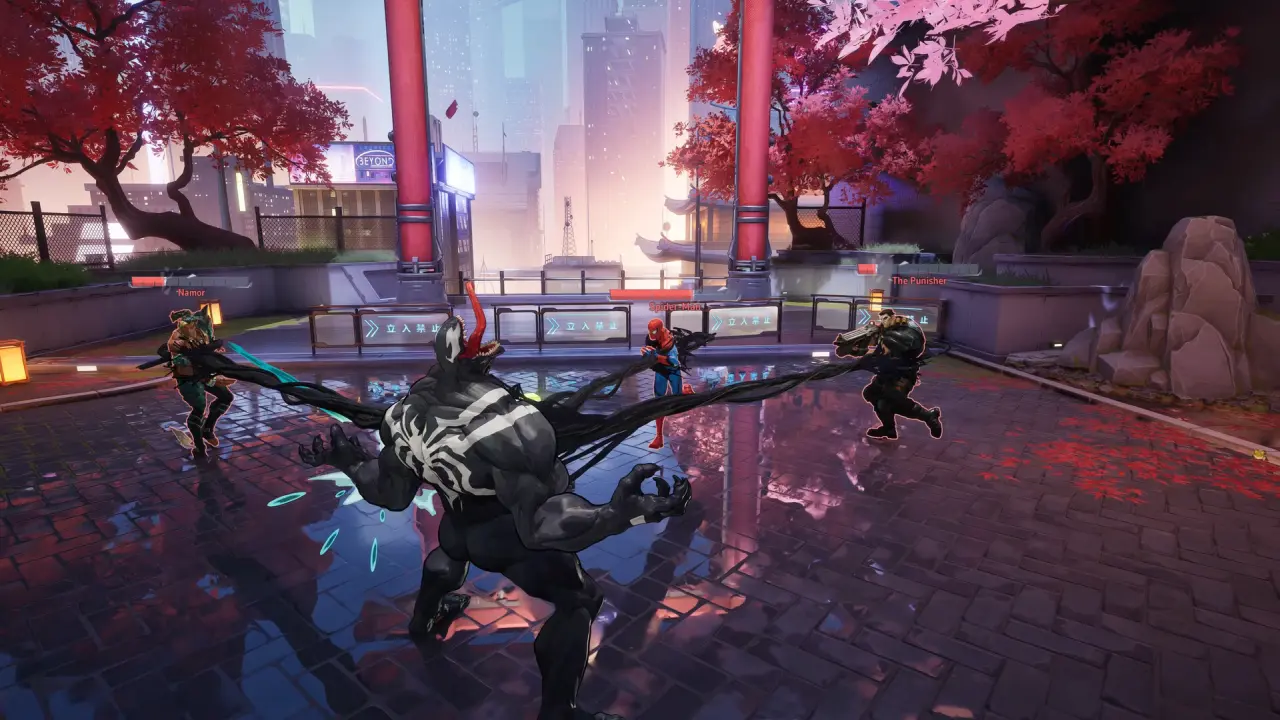
Bronze through Gold play with anyone, which is how your cousin who got the game last week ends up in your Gold lobby.
From Gold I through Celestial, everyone in the party has to sit within three divisions of each other.
Eternity and One Above All players are limited to solo or duo queues, and they can pair with Celestial II players within 200 points.
Playing with higher-ranked friends also drops you into harder lobbies, and your point swings per win and loss can be larger as the game balances the match.
Crossplay in ranked exists only between consoles. PlayStation and Xbox players can queue together, while PC players match only against other PC players, because console players would face an inherent disadvantage.
Ranked Rewards: What You Get for the Grind
Rewards go by the highest rank you reach in a season, not where you finish. Hit Gold once, tumble back to Bronze, and the Gold reward is still yours. You also need at least 10 ranked matches in the season to collect any of it. Here’s what you get:
| Reward | Rank needed |
|---|---|
| Gorr “Gods’ Graveyard” costume | Gold |
| God Bomb nameplate frame | Platinum |
| Divine Tempest nameplate frame | Diamond |
| Grandmaster Crest of Honor (S10) | Grandmaster |
| Celestial Crest of Honor (S10) | Celestial |
| Eternity & One Above All Crest of Honor (S10) | Eternity |
| One Above All Crest of Honor (S10) | One Above All |
| Top 500 Crest of Honor (S10) | Top 500 |
The Gorr costume was the first-half Gold reward, then switched to the Razor-Tooth costume at Gold III
Gold is the cosmetic checkpoint. In the early seasons, the game handed out one unique skin at Gold and repeated it above that rank, so if skins were your only goal, climbing past Gold added nothing to the wardrobe.
The extras higher up are frames and crests. Nameplate frames arrived in Season 3, starting at Platinum.
Previous Gold Rewards
| Season | Gold costume |
|---|---|
| 0 | Golden Moonlight (Moon Knight) |
| 1, first half | Blood Shield (Invisible Woman) |
| 1.5 | Blood Blaze (Human Torch) |
| 2 | Golden Diamond (Emma Frost) |
| 2.5 | Golden Ultron (Ultron) |
| 3 | Emerald Flames (Phoenix) |
| 3.5 | Emerald Blade (Blade) |
| 4 | Siriana’s Silver (Angela) |
| 4.5 | Shenloong’s Creed (Daredevil) |
| 6 | Workwear Woes (Deadpool) |
| 8 | Corporate Cruncher (Devil Dinosaur) |
| 8.5 | Futuristic Focus (Cyclops) |
| 10 | Gods’ Graveyard (Gorr) |
| 10.5 | Razor-Tooth |
Seasons 5, 7, and 9 are missing because I could not confirm them – if you remember what the rewards were, please let me know in the comments below.
Skins are permanent inventory items tied to a specific hero, while Honor Crests are icons on your player card.
Crests are tied to the season you earned them in and are minted per season half, so they stack and let you show progress across seasons.
The Battle Pass is the other place to earn exclusive rewards while you level, and Lattice is the premium currency involved.
Wrapping U: The Short Version
Ranked in Marvel Rivals runs on 9 ranks, 23 individual ranks, 100 points per division, and a Chrono Shield that gets less generous as you climb.
Unlock it at Level 15, survive 10 placement matches, and expect a reset of six or seven divisions every full season.
Gold gets you the seasonal costume, the ban phase starts at Gold III, and the highest rank you reach decides your rewards.
Learn a minimum of two heroes per role before the bans make you, queue with friends within three divisions of you, and quit the queue after two losses in a row.
If you have other questions or additions, let me know in the comments down below!

- Marvel Rivals Ranks in 2026: All Tiers, Rewards & Strategies - October 16, 2026
- Rooms & Exits Kitchen Walkthrough (Level 11, Chapter 3 – Murder Dressed in White) - October 15, 2026
- Rooms & Exits Garden Walkthrough (Level 10, Chapter 3 – Murder Dressed in White) - October 15, 2026